Virtual Matter
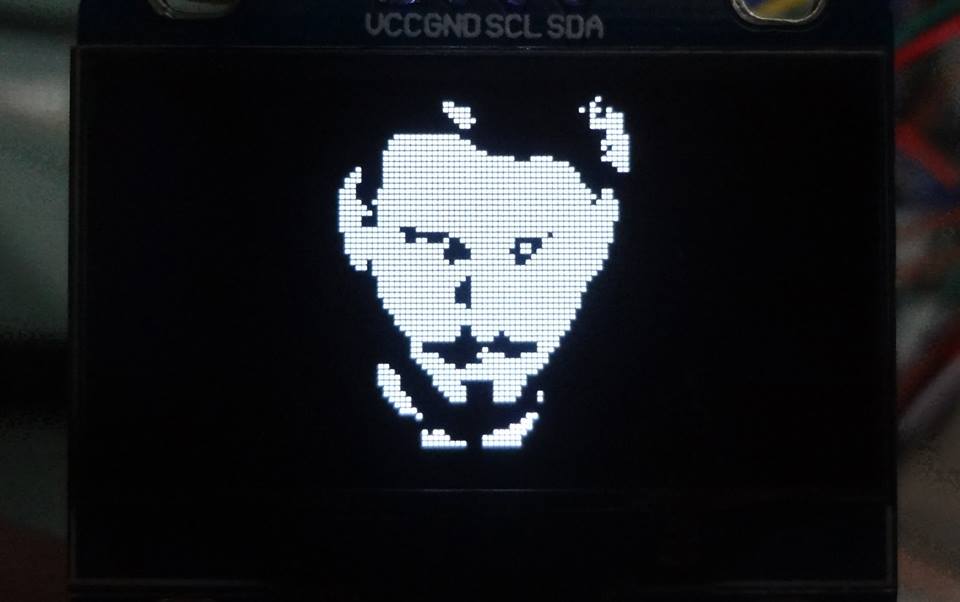
This is a Virtron the smallest matter known in our digital world and the building block of the virtual universe. It consists of numerous recursive functions that expand in all dimensions revealing its fascinating geometric and fractal form. It consists of a bright polygon core and pulsing outer particles that rarely find stability due to the interference of our physical world.
Try exploring it by rotating around with the left click, panning with the middle click and zooming with the right click. You can also Increase or decrease the number of particles in this virtron with +/- keys. Don’t forget to take a screenshot of your findings with the p key.
Click on Continue Reading below for the interactive app:
MIDI Elements Teensy Library
I have created a wrapper library to make programming MIDI controllers on the Teensy board dead easy and super fast. Simply instantiate object for each component like Buttons, Potentiometer, LED, rotary encoders, etc. and let the library handle all the dirty work of reading the raw values and deciding when to send MIDI signals. Enabling you to experiment and concentrate on your creative ideas and not waste too much time with the repetitive technical details and debugging code.
Just in a couple lines of code you can program a fully functioning MIDI controller.
Here’s an example of how simple things are:
boolean debug=false; // print to serial instead of midi
boolean secondary=true; // enable secondary midi messages
int midiChannel=1; // midi channel number
// declare all your components here
Button but(17,midiChannel,1,secondary,debug); // button 1 on pin 17
Button but2(16,midiChannel,2,secondary,debug); // button 2 on pin 16
Potentiometer pot(45,midiChannel,3,secondary,debug); // knob on pin 45 (A7)
Led led(15,midiChannel,3,true); // led on pin 15 with PWM enabled, triggered on the same number as pot
void setup(){
usbMIDI.setHandleControlChange(OnControlChange); // set event handler for CC
}
void loop(){
// add here all the input component reads
pot.read(); // read knob and send midi messages
but.read(); // read buttons and send midi messages
but2.read();
usbMIDI.read(); // read all the incoming midi messages
}
//====================================================================
// event handlers
void OnControlChange(byte channel, byte control, byte value){
// add all your output component sets that will trigger with cc
led.setOn(channel,control,value);
}
Currently only Buttons, Potentiometers and LEDs are supported. But I’m planning on adding RGB LED, rotary encoder, LED bars and ring and button pad classes.
Each component sends two sets of MIDI signals if enabled. For example Buttons send NoteOn, NoteOff, as well as ControlChange values so that they could be easily mapped in Toggle or Instant mode in software like Ableton Live. Also the Potentiometers send secondary NoteOns when values reach 0 or 127, à la MIDI Fighter Pro.
Download: github
To install extract the MIDIElements folder in your arduino/libraries directory
Aftertouch MIDI Glove
It’s been a while since I posted a new project here, but after the Moving Silence festival I got so fascinated, inspired and charged with this creative energy that shortly after I just knew exactly what I was going to do.
At first it occurred to me that so far I’ve been working on mostly controllers but not something as expressive as an instrument on its own. I really got inspired by Shingo Inao and Onyx Ashanti and their devices. I wanted to use my body and movement to produce or effect the sounds, but still be able to use that hand for my usual controllerism routine. That’s when the glove idea came in.
Effects would be triggered by pressing buttons on the glove and tilting it, this way the user is able to precisely control which effect he wants to trigger. Also I wanted to somehow trigger samples from it, by making a big sudden move with my hand. I also light feedback with colors and intensity that would be directly related to the intensity of the effects would be great. I believe that its very important when the audience can relate visual elements, big movements, lighting and color to what they are hearing.
So I began working on this idea by taking apart my old useless controller, I needed the accelerometer and IR proximity sensor inside. It took literally just a few hours to put everything together and start working on the code. I graphed all the values from the sensors and tried to find what kind of data and movements would make more sense for this project. Also I had to smooth out all the readings to get rid of the sudden irregular movements. I ended up using the rate of change looking for sudden accelerations for triggering samples, and constraining some values that would be used for tilt tracking.
The buttons are a bit small and uncomfortable to press all the time, so I’ve put a small piece of cardboard underneath the board to lift it higher, also sew in square pieces of cardboard over the push witches, though they slide out of the way and require readjustment. Still have to work on improving this. If you have any ideas pleas let me know in the comments
I highly believe that such technology should be free and the only way forward is to collectively contribute in its development and innovation. So you are highly encouraged, almost expected, to re use this code, improve it, and share it
As I mentioned above, building it is fairly easy and cheap. Here are all the parts I used.
1 x pair of cycling gloves €10(?)
1 x Teensy 3 €15
1 x ADXL335 Accelerometer €20
1 x Infrared Proximity Sensor €12
4 x Mini Push Buttons €1.20
1 x Common Anode RGB LED €1.5
3 x Resistors €0.60
+ bunch of Wires
Very roughly all the parts for this cost around 60 euros.
This is the diagram of how I wired everything up (note that I used a Teensy 3 microcontroller and the pins are a bit different)
And you can find all the source code here: github
Moving Silence
After being introduced to Achilleas Kentonis, the founder of Artos Foundation, a cultural and research center in Nicosia. I had the opportunity to participate in the Moving Silence event taking place (for the second time in Cyprus) as part of the 4-th X-Dream Festival. A collaborative platform for contemporary silent films and live performance, based in Berlin.
I’m still amazed by the stunning performances, films and the whole energy of the event, It was also great to spend some time and exchange ideas with the founding members of Moving Silence, Matthias Fritsch and Marco Brosolo, as well as other spectacular artists such as Shingo Inao (a.k.a. “stra.”), Anastasia X (a.k.a. “natrYX”) and Xaver Xylophon. Also it was great seeing some of the local talented artist such as Afrodite Nicolaou, Yiannis Christofides, Andreas Vrahimis, Kyriakos Efthymiou, Stelios Frangos, Andreas Moustoukis, Marios Nicolaou, Ioanna Frangou and the Some-take Trio band.
Naturally, I was fascinated by the performances of Shingo and Marco and their self built instruments.
Shingo with his Qgo, an instrument packed with accelerometers and proximity sensors, mangling and twisting sound with every move as he played on the keyboard, I literally held my breath as I watched him perform.
Marco created a magical atmosphere with his singing and performing on Ast, an instrument in a shape of a tree branch with pressure and position strips based on Arduino.
Also worth mentioning that natrYX literally left me speechless with her beautiful singing while rubbing a cello bow on a cymbal. I was amazed by her voice and amazed by the sounds that cymbal produced.
And as for myself, I performed a piece produced together with Marina Kountouridou for the film “Resistance” by Maria Papacharalambous.
As for the grand finale, Achilleas together with all the foreign artists made an improvised performance.
This event left me nothing but the best impressions, I’m really looking forward seeing everyone again and taking part again next time!
All photos courtesy of Antonis Minas.